Is Apple AirPods 4 Worth It in 2026? Honest Review for 2026 Buyers
The Apple AirPods 4 at $99 carry 200,000 ratings and a 4.6 star average. Here is the honest breakdown of what they deliver, who should buy them, and whether the price still makes sense in 2026.
Quick Verdict: The Apple AirPods 4 at $99 are worth buying in 2026 if you use an iPhone and want reliable, low-maintenance earbuds with excellent call quality. They are not the best-sounding wireless earbuds available, but they are the most frictionless option for Apple users, and the 4.6 star rating from over two hundred thousand buyers confirms consistent satisfaction across a massive user base.
FTC Disclosure: ShoppingShare participates in the Amazon Associates Program and the Skimlinks network. We may earn a commission on qualifying purchases made through the links below, at no extra cost to you. This does not influence our assessment.
Why the AirPods 4 Exist
Apple released the original AirPods in 2016, and they changed the wireless earbud market by making pairing effortless and keeping the price accessible. The AirPods Pro line followed with active noise cancellation and a more secure fit. For several years, Apple's lineup consisted of the regular AirPods, the AirPods Pro, and the AirPods Max over-ear headphones.
The AirPods 4 arrived as a refresh of the standard model, addressing the two complaints that had accumulated over multiple generations. The original design sat loosely in some ears, and the sound quality, while adequate, never matched what competitors were achieving at similar prices. Apple responded by redesigning the stem, improving the driver, and adding features that had been missing from the base model.
The result is an earbud that sounds noticeably better than its predecessor, fits more securely, and costs less than the Pro line. Whether that makes it worth your money depends entirely on what you value in a pair of wireless earbuds.
What You Get at $99
ASIN: B0DGHMNQ5Z Price at time of writing: $99.00 Rating: 4.6 out of 5 stars from 200,000 ratings on Amazon Best for: iPhone users who want hassle-free earbuds with good call quality
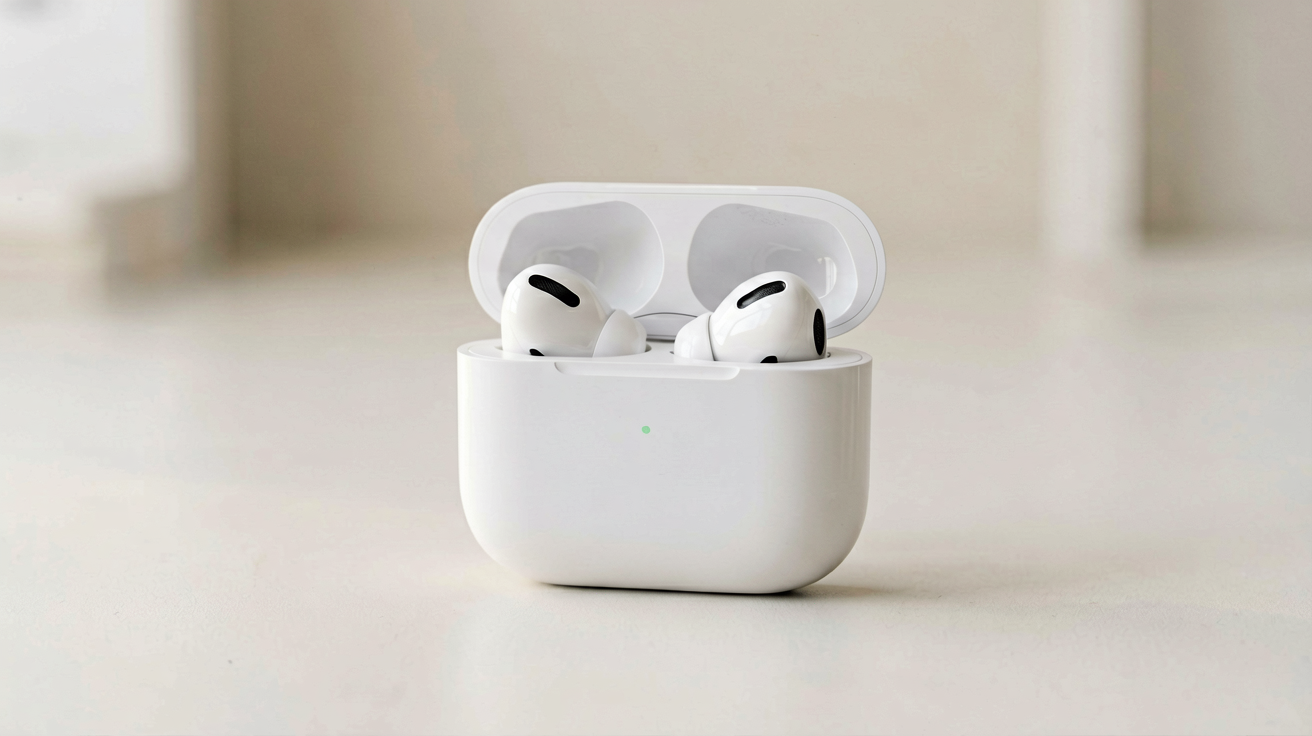
The AirPods 4 come in two variants. The standard version has passive noise isolation and costs $99. The ANC version, which adds active noise cancellation and transparency mode, costs $129. This review covers the standard version, which is the more relevant choice for most buyers who do not need aggressive noise cancellation.
The design is the familiar AirPods silhouette, but with a shorter stem and a slightly wider ear tip option for better fit security. The charging case uses USB-C, which Apple adopted across its product line in 2024, and it supports wireless charging if you have a MagSafe or Qi-compatible charger.
Sound quality is improved over previous generations. The custom Apple driver delivers clearer mids and more defined bass than the earlier flat design, though it still does not match the tonal richness of premium options from Sony or Bose. For casual listening, podcasts, and phone calls, the AirPods 4 sound more than adequate.
Who should buy this and why now: you own an iPhone, you make frequent phone calls on earbuds, and you want something that just works without configuration or fuss. The 4.6 star rating from two hundred thousand ratings tells you this is a proven product with consistent real-world satisfaction. At $99, it is the most accessible entry point into Apple's wireless earbud ecosystem.
Not for you if: you need active noise cancellation for commuting, you use an Android phone, you prioritize audiophile-grade sound quality, or you already own AirPods from an earlier generation and the improvements do not justify the upgrade cost.
Call Quality Is the Real Strength
The AirPods 4 excel at one thing that most people do not talk about enough: phone calls. The dual-microphone array with beamforming isolates your voice from background noise, and the results are consistently clear on both ends of the conversation. This is not marketing language. It is the difference between hearing your caller clearly and hearing a muffled voice that sounds like it is coming through a wall.
If you take a lot of phone calls, whether for work or personal reasons, the AirPods 4 are among the best wireless earbuds available for that purpose. The microphone performance rivals over-ear headphones that cost twice as much, and it exceeds most budget alternatives by a wide margin.
This strength matters more than raw sound quality for most daily use. People listen to music while walking, while commuting, or while doing chores. In those situations, the audio is secondary to convenience and comfort. But when you pick up a phone call, the microphone quality becomes the defining factor, and the AirPods 4 deliver here without compromise.
Battery Life and Charging
Apple rates the AirPods 4 at six hours of listening time per charge, with the case providing an additional two full charges for a total of eighteen hours. This is not class-leading battery life, but it is sufficient for most daily use patterns. A typical commute, workout, and afternoon of casual listening will consume one full charge, and the case keeps you going for several days between full recharge cycles.
The USB-C charging port is convenient, especially if you already use USB-C for your phone and laptop. A five-minute charge provides roughly one hour of listening time, which is enough to bridge the gap between outlets during a busy day. Wireless charging is supported through MagSafe and Qi chargers, giving you flexibility in how you top up the case.
The H2 chip, which powers the AirPods 4, manages power efficiency better than previous generations. Apple's proprietary silicon allows the earbuds to maintain connectivity, process audio, and run computational audio features without draining the battery faster than necessary.
Ecosystem Integration: The Apple Advantage
The AirPods 4 are designed to work within Apple's ecosystem, and that integration is where they pull ahead of every competitor. Switching between your iPhone, iPad, and Mac happens automatically. Playback pauses when you remove an earbud and resumes when you put it back in. Siri responds to voice commands without touching your phone. Find My locates the case and individual earbuds if you misplace them.
These features only work with Apple devices. If you use an Android phone, a Windows laptop, or a non-Apple tablet, you lose most of the convenience that makes AirPods valuable. The earbuds still play music and make calls on any Bluetooth device, but you are using them as generic wireless earbuds rather than as part of an integrated ecosystem.
This ecosystem lock-in is a double-edged sword. It makes the AirPods 4 an excellent choice for iPhone users who stay within Apple's product family. It makes them a poor choice for anyone who mixes devices from different manufacturers.
Sound Quality: Good, Not Great
The AirPods 4 sound better than previous standard-model AirPod generations, but they do not compete with the best-sounding wireless earbuds at any price. The bass response is tighter and more controlled, the mids are clearer, and the overall sound profile is more balanced than the flat, slightly harsh character of older models.
If you listen to podcasts, audiobooks, and casual music playlists, the AirPods 4 sound perfectly fine. Most listeners will not notice a significant difference between these and earbuds costing twice as much during everyday use. If you are a serious music listener who cares about timbre, soundstage, and detail retrieval, you will notice the limitations, and you should consider alternatives from Sony, Bose, or Sennheiser.
The absence of active noise cancellation also affects perceived sound quality. Without ANC, external noise bleeds into your listening experience, which can make music sound less detailed and less immersive. Transparency mode, available only on the $129 ANC variant, partially addresses this by letting ambient sound in when you need awareness of your surroundings.
Fit and Comfort
The AirPods 4 use a universal design that fits most ear shapes without interchangeable tips. This is both an advantage and a limitation. The advantage is that there is nothing to swap, configure, or lose. You put them in your ears, and they stay there. The limitation is that some ear shapes will not find a secure fit, and the open design provides less isolation than in-ear models with silicone tips.
For most people, the fit is comfortable for extended wear. The weight distribution is even, and the stem design keeps the earbud stable during movement. If you run, bike, or engage in vigorous exercise, the fit may not be as secure as a sport-focused earbud with ear hooks or fins. For walking, commuting, and general daily use, the fit is adequate.
The Competition in 2026
At $99, the AirPods 4 face competition from several directions. Samsung's Galaxy Buds FE offer similar features at a similar price for Android users. Google's Pixel Buds A offer strong integration with Pixel phones at a comparable price point. Budget options from Anker, TOZO, and Soundcore provide decent sound quality at half the price, though they lack the ecosystem integration and call quality excellence of the AirPods.
The question is not whether other earbuds are technically superior in isolated metrics. The question is whether the AirPods 4 deliver the best overall experience for your specific use case. For iPhone users who value convenience, call quality, and ecosystem integration, they do. For everyone else, there are likely better-suited alternatives.
Final Recommendation
The Apple AirPods 4 at $99 are worth buying in 2026 if you use an iPhone and want earbuds that work seamlessly with your existing devices. They excel at phone calls, integrate effortlessly with Apple's ecosystem, and deliver sound quality that is good enough for most daily listening. The 4.6 star rating from two hundred thousand ratings reflects genuine buyer satisfaction across a massive user base.
Skip them if you need active noise cancellation, use Android devices, or prioritize audiophile-grade sound quality over convenience and integration. In those cases, spend more on the AirPods Pro 2 ANC variant or explore alternatives from Samsung, Sony, or Google that better match your ecosystem and priorities.
👉 Check current price on Amazon →
Published specs above are manufacturer-stated and cited as such; we have not run independent laboratory measurements.
Buyer's Guide (based on published specs)
- Apple AirPods 4 ($99): Best for iPhone users who prioritize call quality, ecosystem integration, and hassle-free operation.
- AirPods Pro 2 ANC ($129 recommended upgrade): Best for commuters and noisy environments where active noise cancellation justifies the additional cost.
Read the published spec that matters for your own use before you buy. The rest is noise.
Related Guides
- AirPods 4 vs AirPods Pro 2 Comparison 2026
- AirPods 4 vs AirPods Pro 3: Which To Buy in 2026
- Apple EarPods USB-C vs AirPods 4: Which To Buy 2026
Internal Picks
- Looking for a ready shortlist? See our Christmas Gifts
ShoppingShare participates in the Amazon Associates Program. We may earn commissions from qualifying purchases at no extra cost to you. Our reviews are based on independent analysis of user reviews and product specifications.
More Reviews & Guides
View all →

Found Something You Like?
All prices on Amazon may change. Check the current deal before it's gone.
More Amazon Deals →