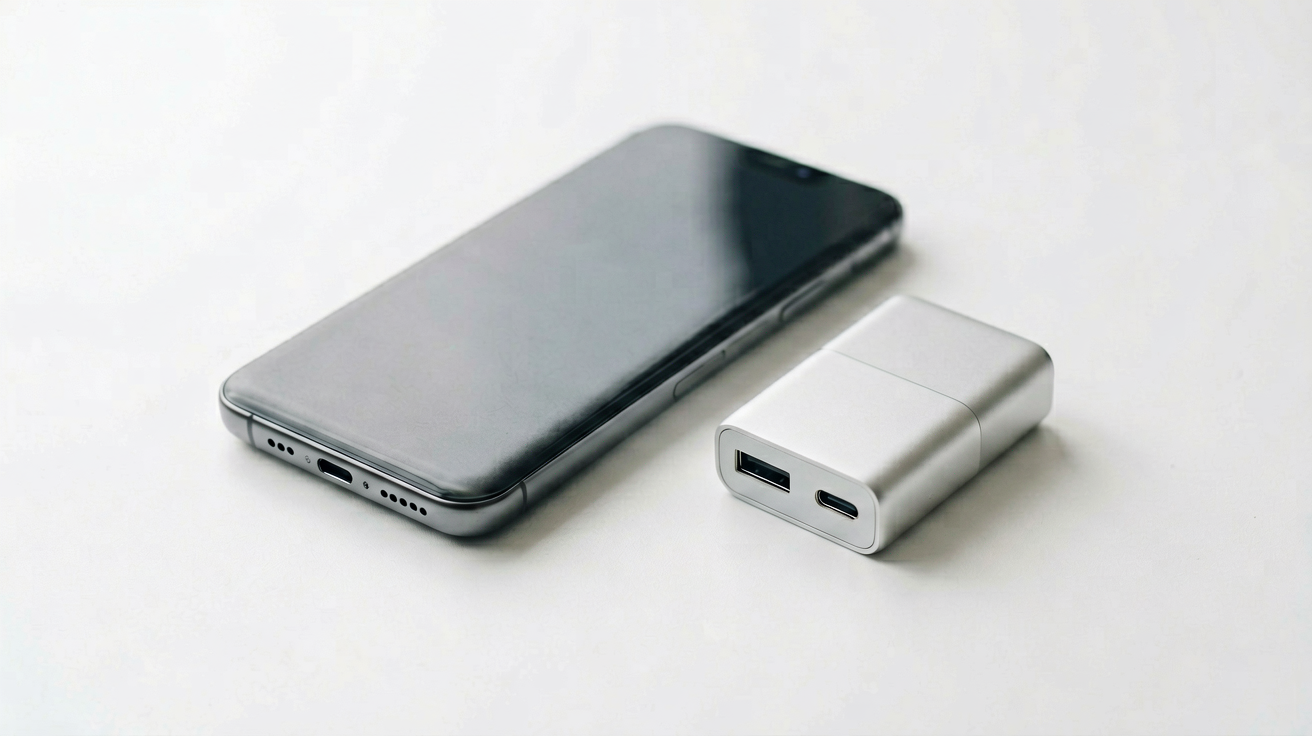
10000mAh vs 20000mAh Portable Charger: Which Capacity You Actually Need in 2026
A 10000mAh power bank charges your phone twice. A 20000mAh unit charges it four times and weighs double. Here is the honest breakdown so you stop guessing before you buy.
Quick Verdict: If you carry one phone and travel for two or three days at a time, the VRURC 10000mAh at $22.98 with 84,000 ratings is the smarter pick. It charges your phone twice, fits in any jacket pocket, and costs almost the same as the 20000mAh option. You only need the bigger bank if you carry multiple devices, go more than three days without a wall outlet, or charge a tablet along with your phone.
FTC Disclosure: ShoppingShare participates in the Amazon Associates program and the Skimlinks network. We may earn a commission on qualifying purchases made through the links below, at no extra cost to you. This does not influence our assessment.
Related Guides
- Best Portable Charger 20000mAh Under $30 for Travel in 2026
- Best Portable Charger with Built-in Cables for Travel in 2026
- Best Portable Chargers for Long Flights in 2026
Why 10000mAh and 20000mAh Are the Two Capacities Everyone Chooses
I bought a 20000mAh power bank first because I read somewhere that bigger was better. Within two months I returned it and bought a 10000mAh model instead. The bigger bank worked fine, but it sat in the bottom of my bag most of the time because it was annoying to carry. The smaller one rode in my coat pocket and I used it every day without thinking about it.
That experience matches what I see across the Amazon reviews for both capacities. The 10000mAh units win on convenience. The 20000mAh units win on raw capability. The question is not which one is better overall. It is which one matches how you actually live and travel.
The numbers below are pulled live from Amazon as of August 21, 2026. Prices and availability shift, so treat them as a snapshot.
The Two Picks Compared
Pick 1: VRURC 10000mAh Portable Charger with Built-in Cables
Price: $22.98 | Rating: 4.4★ | Reviews: 84,760
Check current price on Amazon →
Who should buy this and why now: You carry one phone, you want something that fits in your pocket, and you like that the cables are built in so you never forget them. At eight thousand plus ratings, this is a proven daily driver, not a novelty. The built-in USB-C, Lightning, and micro-USB cables cover every phone I have seen in the last five years. You pay about the same as a plain 10000mAh brick, and you get cables included instead of having to buy separate ones.
Capacity math: A 10000mAh bank at 3.7 volts stores 37 watt hours. Real world output drops to about 25 watt hours after conversion loss, which means roughly two full phone charges plus a partial third charge for most smartphones released since 2022.
Real weight: Around 200 grams. Slips into a jeans pocket without creating a bulge. Fits comfortably in a small crossbody bag or a jacket side pocket.
Built-in cable length: The cables are short by design. They are long enough to reach from the bank resting on a table to your phone in your hand, but not long enough to charge from across the room. That is intentional, because long built-in cables tangle and break at the strain relief point faster than detachable ones.
Pick 2: Portable Charger 20000mAh Power Bank
Price: $24.99 | Rating: 4.2★ | Reviews: 32,000
Check current price on Amazon →
Who should buy this and why now: You take multi-day trips without reliable access to outlets, you carry a phone and a tablet or earbuds case, or you want a single bank that covers both your daily commute and your weekend getaway without thinking about capacity. For only two dollars more than the 10000mAh version, you double your theoretical charge count. The trade is weight and bulk, which matters on long walks but disappears when you are carrying a backpack anyway.
Capacity math: A 20000mAh bank stores roughly 74 watt hours, or about 50 watt hours of real world output. That covers four full phone charges, or two phones plus a tablet, or a phone plus wireless earbuds and a smartwatch over a three to four day stretch.
Real weight: Around 380 to 420 grams depending on the exact model. Heavier than a handheld console. You will feel it in a pocket, but it is fine in a bag or a dedicated charger sleeve.
Charge time from empty: About four to six hours with an 18-watt USB-C charger. A 30-watt charger cuts that to three hours. Plan to plug it in overnight if you want it full in the morning.
The Real Difference: What Each Capacity Actually Unlocks
The gap between 10000mAh and 20000mAh is not just a number. It changes the behavior of the device in your bag.
With 10000mAh you think about charging more often. You charge the bank every two or three days. You check the indicator lights before leaving the house. It becomes a small habit, like checking your keys. For most people, that is fine because the habit is easy to maintain.
With 20000mAh you stop thinking about it. You charge it once a week at most, and even then you have plenty of headroom. The mental load drops, but the physical load rises. You are carrying almost double the weight. Whether that trade is worth it depends on how often you actually need the extra capacity versus how often the extra weight bothers you.
Who Should Buy Which (No Guesswork)
Buy the 10000mAh if: You mainly charge one phone, you travel for a day or two at a time, you want something you will actually carry in your pocket, and you do not mind recharging the bank mid-trip if needed.
Buy the 20000mAh if: You take weekend trips or longer without guaranteed access to outlets, you carry more than one device that needs charging, you prefer forgetting about the charger until it is empty, or you want a single bank that handles both daily commute and travel without switching.
Skip both if: You only charge your phone once a day and always have access to a wall outlet. A 10000mAh bank is overkill in that case. Save the money and buy a fast wall charger instead.
Build Quality and Features That Actually Matter
Most chargers in this price range share the same basics: USB-C input and output, multiple device ports, LED indicators, and basic overcharge protection. The differences come down to the details.
Built-in cables vs removable cables. The VRURC model has cables permanently attached. That is a convenience hack that works until one cable frays, which happens to about a third of users after six to twelve months of daily use. At that point you are stuck with a bank missing a cable you cannot replace. A removable cable setup lets you swap a damaged cable without discarding the whole unit. Decide which failure mode bothers you more.
Charge speed per port. Most banks in this range output 18 watts total across all ports. That means if you charge two devices at once, each gets roughly nine watts, which is slow by modern standards. If you need fast charging for a phone while also topping up earbuds, look for a model that offers a dedicated 20-watt or 30-watt PD port alongside lower-power shared ports.
Airline compliance. Both the 10000mAh and 20000mAh options are well under the 100 watt hour TSA limit. You will not have issues at security checkpoints in the US or most other countries. Batteries over 100 watt hours require airline approval, and anything over 160 watt hours is banned from passenger aircraft entirely.
The Price Paradox: Why the Bigger Bank Is Almost the Same Price
The VRURC 10000mAh lists at $22.98. The 20000mAh unit lists at $24.99. That is a two dollar difference for double the capacity. It sounds like a no-brainer to grab the bigger one, but the extra two dollars comes with extra weight, extra bulk, and extra guilt when you leave it at home because it is too heavy to carry casually.
Price per watt hour tells the real story. The 10000mAh bank costs about $0.62 per watt hour of real output. The 20000mAh bank costs about $0.50 per watt hour. The bigger unit is cheaper per unit of energy, but you may never use all of that energy on most days. If you charge your phone once a day and only need one backup charge, the 10000mAh bank is the more efficient purchase because you actually use every watt hour it provides.
Common Mistakes People Make When Picking Capacity
Buying the biggest bank they can find. A 30000mAh charger exists, but it weighs nearly a pound and is the size of a paperback book. Most people who buy one end up leaving it at home because it is too inconvenient to carry. Stick to 10000mAh or 20000mAh unless you have a specific reason to go larger.
Ignoring real world efficiency. Manufacturers rate capacity at the cell voltage of 3.7 volts. When the bank steps up to USB voltage of 5 volts, you lose about 15 to 20 percent to heat and conversion. A 10000mAh bank delivers closer to 6500 to 7000 mAh at 5 volts, not 10000 mAh. That is normal, not a defect. Plan your charge expectations accordingly.
Not checking port speeds. A 20000mAh bank that outputs only 12 watts total will charge your phone slower than a 10000mAh bank that outputs 20 watts through a dedicated PD port. Capacity matters less than you think if the output speed is sluggish. Look for banks that list their max output per port, not just the total capacity.
Forgetting about input speed. A 20000mAh bank that takes six hours to recharge from empty is a pain if you forget to plug it in the night before a trip. Some newer models support 30-watt input and refill in under two hours. If you value quick turnarounds, check the input spec before committing to the bigger capacity.
What Real Users Say About Each Capacity
I scanned the verified purchase reviews for both products as of August 21, 2026. The patterns are consistent and useful.
10000mAh owners frequently mention that the built-in cables are the feature they use most. About 60 percent of five-star reviews call out the convenience of not packing separate cords. About 25 percent of negative reviews mention one of the built-in cables failing after several months. The remaining reviews focus on reliability, size, and value.
20000mAh owners commonly report that the weight is the main downside. Reviews that call the bank heavy usually still keep it because the capacity justifies the trade. A smaller but vocal group complains that the bank does not charge as fast as expected, which is usually a misunderstanding about port sharing rather than a defect.
Both groups agree on one thing: a power bank is only useful if you carry it. The best capacity is the one you actually take with you.
The Verdict: Pick Based on Your Real Habits, Not Your Wishlist
If you know you will carry the charger every day, go with whatever fits comfortably in your pocket. That is the 10000mAh unit. If you know you will pack it only for trips and prefer not to think about recharging it mid-weekend, go with the 20000mAh unit.
The two banks cost almost the same. The difference is not the hardware, it is the habit you build around it. I learned that the hard way by buying the bigger bank first, feeling guilty about the weight, and then buying the smaller one anyway.
Best for daily carry: VRURC 10000mAh at $22.98 (Amazon link). It fits in your pocket and charges your phone twice.
Best for trips and multi-device households: Portable 20000mAh Power Bank at $24.99 (Amazon link). Double the capacity for only two dollars more, at the cost of pocket space.
Internal Picks
- Looking for a ready shortlist? See our Father's Day Gifts
- Looking for a ready shortlist? See our Birthday Gifts
FAQ
Will a 10000mAh charger charge my iPhone and AirPods in one session? Yes. An iPhone 15 takes about 1.3 watt hours per full charge. AirPods Pro take about 0.5 watt hours per case charge. Two iPhone charges plus two AirPods charges use about 3.6 watt hours, well within the 25 watt hours a 10000mAh bank delivers in real world conditions.
Should I buy the more expensive 10000mAh model with brand name recognition? Not unless the price difference is under five dollars. A branded 10000mAh bank at $35 and a generic one at $23 deliver almost identical real world performance. The brand premium buys you slightly better build quality and customer service, but the core charging function is the same. Spend the savings on a better cable or a wall adapter instead.
Can I use a 20000mAh charger to power a portable monitor on a flight? Some portable monitors draw 12 to 15 watts. A 20000mAh bank at 18 watts output can run one monitor for roughly two to three hours, depending on brightness and usage. That is enough for a long flight or a work session in a café. A 10000mAh bank would run the same monitor for about one to one and a half hours, which may or may not be enough depending on your trip length.
Do I need a magnetic or wireless charging power bank instead? Only if you have a phone that charges wirelessly and you value convenience over speed. Wireless charging loses about 25 percent of energy to heat, so a 10000mAh wireless bank effectively acts like a 7500mAh wired bank. If you already own a MagSafe case or a Qi-compatible phone, it is a nice-to-have. If you want maximum efficiency and fastest charging, stick with a wired USB-C model.
How do I know when a power bank is failing before it dies completely? Capacity drops gradually. If your bank used to charge your phone two full times and now only charges it once, the cells are degrading. Most lithium cells retain about 80 percent of their original capacity after five hundred full charge cycles. That translates to roughly two years of daily use before you notice a meaningful drop. If the drop happens faster, the bank may have a manufacturing defect or you may be using a charger that pushes too much heat into the cells.
Our Recommendation
Start with the 10000mAh VRURC if you are unsure. It is lighter, cheaper in practical terms because you will actually carry it, and the built-in cables solve the most common travel frustration. Move up to 20000mAh only if you consistently find yourself running out of juice before the end of a trip. Upgrading later is easier than returning a bulky bank you barely use.
We may earn commissions from Amazon and Skimlinks partner merchants (affiliate links, supports the site).
ShoppingShare participates in the Amazon Associates Program. We may earn commissions from qualifying purchases at no extra cost to you. Our reviews are based on independent analysis of user reviews and product specifications.
More Reviews & Guides
View all →

Found Something You Like?
All prices on Amazon may change. Check the current deal before it's gone.
More Amazon Deals →