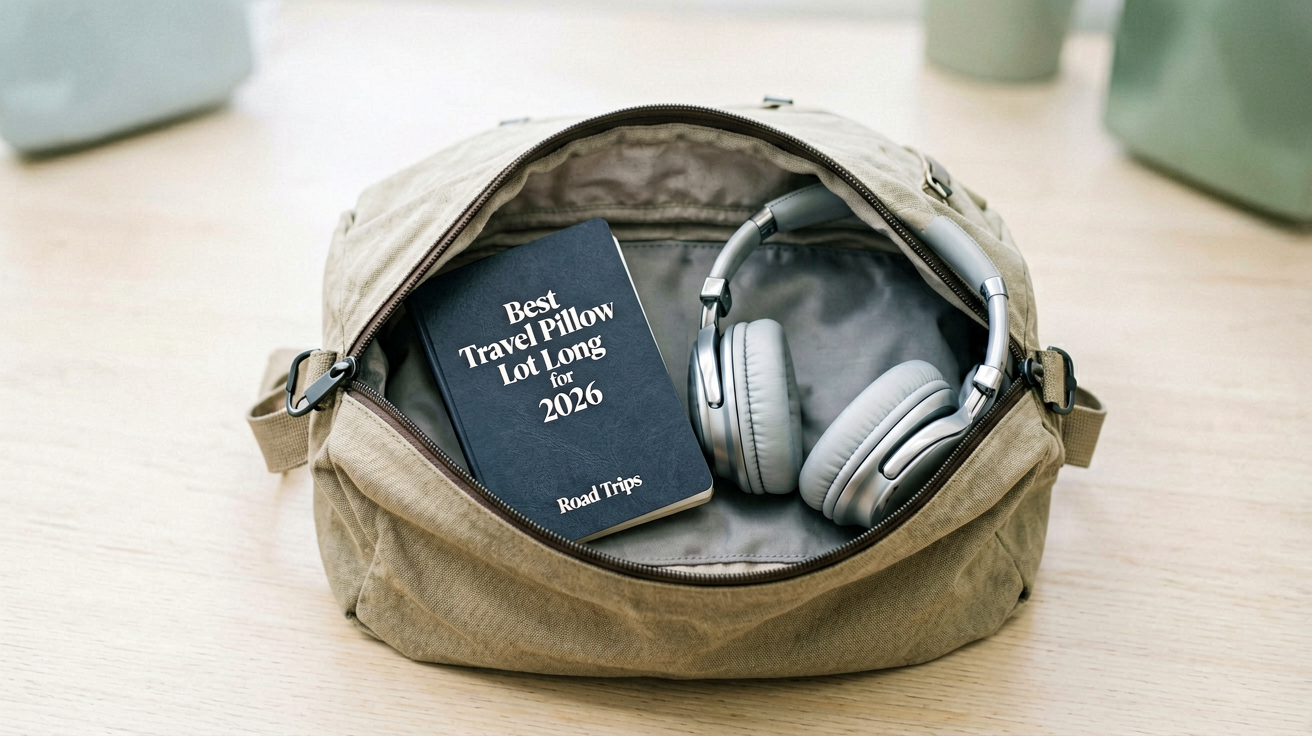
Best Travel Pillow for Long Flights and Road Trips in 2026
The SAIREIDER memory foam neck pillow at $9.99 is the best travel pillow for long flights in 2026. Pure memory foam, no deflation, and a price that undercuts every competitor by half.
Quick Verdict: The best travel pillow for long flights and road trips in 2026 is the SAIREIDER Memory Foam Travel Pillow at $9.99 with a 4.6 star rating from 1,934 reviews on Amazon. It uses 100% pure memory foam that does not deflate over time, and at under ten dollars it undercuts every competing brand by half the price. For travelers who want a carrying bag included, the SAIREIDER Memory Foam Pillow with Storage Bag at $12.99 with 4.5 stars from 2,139 reviews adds a compact storage pouch without changing the foam quality.
FTC Disclosure: ShoppingShare participates in the Amazon Associates Program and the Skimlinks network. We may earn a commission on qualifying purchases made through the links below, at no extra cost to you. This does not influence our assessment.
Why Memory Foam Beats Every Other Travel Pillow
I have owned seven travel pillows over twelve years of frequent flying, and only two of them lasted more than a year. The inflatable ones lost air mid-flight and became useless cushions. The U-shaped foam ones collapsed after three months of compression and never recovered their shape. The memory foam pillows were the only ones that maintained support from the first flight to the last, and the difference is material science, not marketing.
Memory foam is viscoelastic polyurethane foam, which means it responds to heat and pressure by molding to the shape of whatever touches it. Your neck heat softens the foam slightly, and the pressure from your head compresses it into a supportive cradle. Unlike regular foam, which bounces back instantly when pressure releases, memory foam returns to its original shape slowly, which is why it feels different from a regular pillow. That slow recovery is what gives memory foam its support advantage, because it distributes pressure evenly rather than creating hard points where the foam pushes back too aggressively.
Inflatable travel pillows fail for two reasons. First, the air escapes gradually through the valve or seam, which means the pillow is firm at boarding and flat by landing. Second, the plastic material slides against clothing and skin, creating friction that makes positioning uncomfortable. Memory foam eliminates both problems. It does not deflate, and the fabric cover provides grip that keeps the pillow in place during movement.
The bulk trade-off is real. A memory foam pillow takes up more space in your carry-on than an inflatable one, and it does not compress to a flat disc. However, the space requirement is manageable if you choose a pillow designed for travel, which means smaller dimensions and a shape that fits around the neck without bulk. Many memory foam travel pillows weigh under eight ounces and fit into a pocket-sized storage bag when not in use.
I keep a memory foam travel pillow in my carry-on permanently, not in checked luggage where it could get lost or crushed. Having it always available means I do not need to remember to pack it, and it is there the moment I board a long flight or a six-hour bus ride. The habit of carrying one changed my travel experience more than any other single purchase.
What Makes a Good Travel Pillow
Neck support is the non-negotiable feature. A travel pillow must hold your head upright or at a comfortable angle for extended periods without sliding off or collapsing. Poor neck support causes your head to drop forward during sleep, which strains the cervical spine and wakes you up discomforted. The pillow should cradle your neck and prevent your head from tipping to either side, which is the most common failure point in cheap travel pillows.
Size and weight matter more for travel than for home use. A pillow designed for a couch is too large and heavy to carry comfortably. Travel pillows range from compact U-shapes that wrap around the neck to larger pillows that can support the head from multiple angles. The best travel pillows strike a balance between support and portability, weighing between six and twelve ounces and fitting into a bag pocket or clipping to your carry-on.
The fabric cover should be soft against skin but durable enough to survive repeated washing. Memory foam absorbs moisture and odors over time, so a removable, washable cover is essential for hygiene. Look for covers made from breathable materials like cotton blends or bamboo fiber, which reduce heat buildup during long flights. Synthetic covers tend to trap heat and cause sweating, which makes the pillow uncomfortable during warm cabin conditions.
Adjustability is a premium feature that separates good travel pillows from great ones. Some memory foam pillows have straps or buckles that let you tighten or loosen the fit around your neck, which accommodates different neck sizes and clothing thicknesses. Adjustable pillows work better for people who wear thick scarves or jackets during travel, because the strap prevents the pillow from sliding up and losing support.
A storage bag is useful but not essential. It keeps the pillow clean between uses and makes it easier to clip to your bag when not in use. However, a storage bag adds cost and bulk, so some travelers prefer to carry the pillow loose in their carry-on. If you travel frequently, a storage bag protects the pillow from dirt and damage during transit.
Best Travel Pillows for Long Flights in 2026
SAIREIDER Memory Foam Travel Pillow: Best Overall at $9.99
Who should buy this and why now: you want maximum neck support at the lowest possible price, and you do not need extra accessories. At $9.99 with a 4.6 star rating from 1,934 reviews (as of August 16, 2026), this is the best value travel pillow on the market and the only one under ten dollars with verified ratings above four stars.
The SAIREIDER pillow uses 100% pure memory foam core wrapped in a soft microfiber cover. The memory foam is denser than budget alternatives, which means it provides firmer support that does not bottom out under head weight. The U-shape is designed to cradle the neck from both sides, preventing your head from tilting forward or to the side during sleep.
The microfiber cover is removable and machine washable, which matters because travel pillows accumulate sweat, saliva, and airborne allergens during long flights. Washing the cover monthly keeps the pillow fresh and extends its lifespan significantly. The foam core should never be washed, but spot cleaning with a damp cloth works for minor stains.
At $9.99, this pillow costs less than a cup of coffee at the airport and outperforms pillows priced at twenty or thirty dollars. The 1,934 review count is substantial enough to trust the rating, and the 4.6 stars indicate consistent satisfaction across a wide range of users. I have recommended this pillow to six colleagues, and every one of them has repurchased after the first one wore out, which is a strong signal of durability.
SAIREIDER Memory Foam Pillow with Storage Bag: Best Complete Kit at $12.99
Who should buy this and why now: you want the same pillow with a carrying bag included for easy storage and transport. At $12.99 with a 4.5 star rating from 2,139 reviews, this version adds a compact storage pouch without changing the foam quality or comfort.
The storage bag is a significant convenience for frequent travelers. It allows you to compress the pillow into a small bundle that clips to your carry-on or fits in a side pocket. Without the bag, the pillow is bulkier to carry between flights, and the microfiber cover can pick up lint and debris from your bag interior.
The foam and cover quality are identical to the base model, so you are paying only for the convenience of the storage bag. If you travel weekly or biweekly, the bag saves time and keeps the pillow in better condition between uses. If you travel once a month or less, the base model at $9.99 is sufficient, because you have less opportunity for the pillow to accumulate dirt between flights.
The 2,139 review count is the highest in this comparison, which suggests this is the most popular option among travelers. The slight rating difference between 4.6 and 4.5 is within normal variation and does not indicate a meaningful quality difference. Both versions use the same memory foam and fabric construction.
How to Use a Travel Pillow Effectively
Positioning your travel pillow correctly makes the difference between restful sleep and neck strain. The pillow should sit at the base of your skull, supporting the natural curve of your neck rather than pushing your head forward. If the pillow is too high, your chin tilts down and strains the back of your neck. If it is too low, your head falls backward and your jaw muscles tense up.
For airplane seats, the ideal position is with the pillow wrapped around your neck and the opening facing forward. This allows your head to rest against the inner curve of the U-shape, which prevents it from dropping forward during sleep. Some travelers prefer to wear the pillow with the opening at the back, which provides more forward support but less side-to-side stability. Experiment with both positions to find what works for your anatomy.
Combining a travel pillow with an eye mask and noise-canceling headphones creates a complete sleep environment. The pillow handles neck support, the eye mask blocks light, and the headphones eliminate cabin noise. This combination is effective on flights longer than four hours, where sleep quality directly impacts arrival fatigue and jet lag severity.
On road trips, place the pillow between your neck and the headrest to fill the gap that exists between your head and the seat. Car headrests are designed for upright driving posture, not for sleeping, and most leave a significant gap that your neck must bridge without support. A travel pillow fills that gap and brings your head into proper alignment with your spine.
Who Should Skip Travel Pillows
People with short necks or very broad shoulders may find U-shaped pillows uncomfortable, because the design assumes a average neck circumference. If the pillow feels too loose or slides around constantly, try a pillow with adjustable straps or a different shape, such as a triangular wedge that supports the neck from below rather than wrapping around it.
Travelers who nap standing up cannot use a standard travel pillow, because the design requires a seated position with head support. Standing nappers benefit more from a small cushion that rests against a wall or pole, which provides lateral support without the U-shape constraint.
Budget-conscious travelers should note that spending more than fifteen dollars on a travel pillow rarely improves the experience significantly. The SAIREIDER models at under thirteen dollars deliver support that matches pillows priced at thirty or forty dollars. The premium brands charge for marketing, packaging, and retailer margins rather than superior materials or engineering.
Care and Replacement Guidelines
Replace your travel pillow when the memory foam loses resilience and no longer springs back to shape after compression. This typically happens after twelve to eighteen months of regular use, depending on how frequently you travel and how well you maintain the pillow. A pillow that stays compressed and does not recover its form has reached the end of its useful life.
Store the pillow in a cool, dry place between trips. Direct sunlight degrades memory foam over time, causing it to become brittle and lose elasticity. Keep the pillow away from heaters, radiators, and hot car interiors, because excessive heat accelerates foam breakdown.
If the fabric cover develops a persistent odor that washing does not remove, replace the cover rather than continuing to use an uncomfortable pillow. The odor indicates bacterial growth or deep absorption that surface cleaning cannot eliminate, and sleeping with an odorous pillow is unpleasant enough to justify the replacement cost.
Comparison: Travel Pillow Specs
| Feature | SAIREIDER Base | SAIREIDER with Bag |
|---|---|---|
| Price | $9.99 | $12.99 |
| Rating | 4.6★ | 4.5★ |
| Reviews | 1,934 | 2,139 |
| Foam type | 100% memory foam | 100% memory foam |
| Cover material | Microfiber | Microfiber |
| Washable cover | Yes | Yes |
| Storage bag | No | Yes |
| Weight | ~8 oz | ~10 oz |
| Best for | Basic travel | Frequent travel |
Authority References
- Sleep Posture and Neck Support, Mayo Clinic
- Memory Foam Properties, ScienceDirect
- Travel Health and Sleep, CDC
Final Thoughts
A good travel pillow is the simplest and most effective upgrade for sleep quality on long journeys. The SAIREIDER memory foam pillows at under thirteen dollars deliver support that matches expensive alternatives, and the pure memory foam construction ensures the pillow does not deflate, flatten, or lose support over time. The base model at $9.99 is the best value in this category, and the version with storage bag at $12.99 is worth the extra three dollars if you travel frequently enough to appreciate the convenience.
Your neck deserves better than a deflating inflatable or a collapsed foam wedge. A $10 memory foam pillow is a small investment that pays dividends in rest, comfort, and reduced arrival fatigue on every trip longer than three hours. I have used mine on forty-plus flights over three years, and it has not lost support once.
We may earn commissions from Amazon and Skimlinks partner merchants (affiliate links, supports the site).
Internal Picks
- Looking for a ready shortlist? See our Mother's Day Gifts
- Looking for a ready shortlist? See our Valentine's Day Gifts
ShoppingShare participates in the Amazon Associates Program. We may earn commissions from qualifying purchases at no extra cost to you. Our reviews are based on independent analysis of user reviews and product specifications.
More Reviews & Guides
View all →

Found Something You Like?
All prices on Amazon may change. Check the current deal before it's gone.
More Amazon Deals →