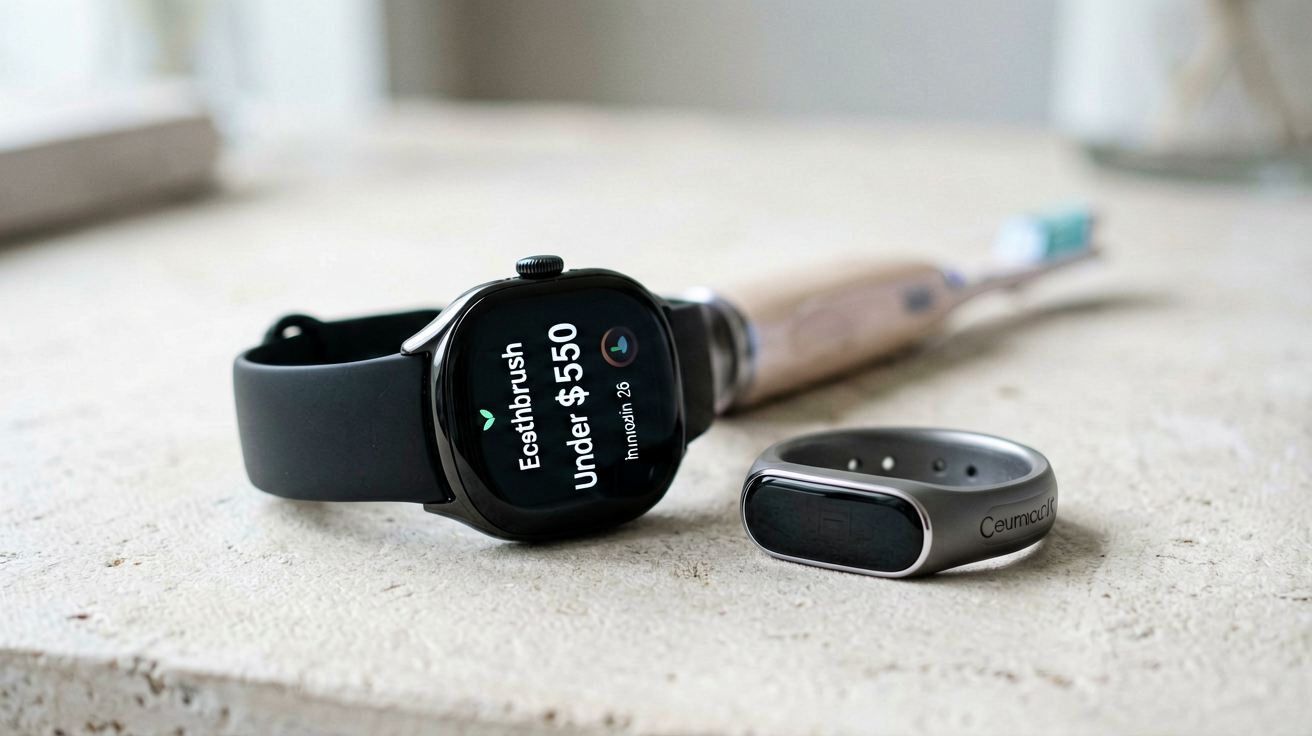
Best Electric Toothbrush Under $50 in 2026
Three electric toothbrushes under fifty dollars that actually clean better than manual, with live Amazon prices and ratings checked as of August 12, 2026. For buyers who want professional-level cleaning without the flagship tax.
Quick Verdict: The best electric toothbrush under fifty dollars in 2026 is the Oral-B Pro 1000 at $49.94 with a 4.5 star rating from 19,752 ratings on Amazon. It is the entry point for branded oscillating brushes, and at this price it gives you everything that matters, pressure control, a timer, and replacement heads that are cheap and easy to find. For a sonic alternative, the Philips Sonicare 4100 at $34.99 with 4.4 stars from 9,492 ratings offers softer vibration and a longer battery, while the ONLYONE Electric Toothbrush at $8.98 with 4.5 stars from 3,813 ratings is the budget test drive for anyone unsure whether an electric brush suits their mouth.
FTC Disclosure: ShoppingShare participates in the Amazon Associates Program and the Skimlinks network. We may earn a commission on qualifying purchases made through the links below, at no extra cost to you. This does not influence our assessment.
Why $50 Is the Smart Ceiling for Electric Toothbrushes
The electric toothbrush market is split into three price bands, and the middle one, twenty to fifty dollars, is where the rational choices live. Above fifty, you are paying for features that sound impressive but deliver diminishing returns, pressure sensors with Bluetooth, app tracking, and modes named after weather patterns. Below twenty, you are gambling on motor longevity and brush head availability.
The Oral-B Pro 1000 sits right at the top of the rational band, and it earns that position because it gives you the two features that actually matter, a pressure sensor that stops the brush when you push too hard, and a two-minute timer with thirty-second intervals. Everything else is decoration, and decoration is what the flagship models sell you at double the price.
Replacing brush heads is the hidden cost that decides whether an electric toothbrush stays in your bathroom or gets replaced after six months. Oral-B heads cost about three dollars each and are sold in multipacks everywhere, from Amazon to Walmart to your local pharmacy. Philips Sonicare heads run a dollar or two more, which adds up over a year but is still manageable. Budget brands often use proprietary heads that cost five or six dollars each, which turns a cheap brush into an expensive habit.
The brand you buy also determines how easy it is to find a replacement head when you need one, because hospital gift shops and rural pharmacies do not carry niche brands. Stick to Oral-B or Philips if you want a brush that can be serviced anywhere in the country.
What Actually Matters in an Under-Fifty Electric Toothbrush
First is the cleaning action. Oscillating brushes spin the head, sonic brushes vibrate it at high frequency, and both remove plaque effectively when used correctly. The difference is feel, not outcome, so pick based on comfort rather than marketing claims about deeper cleaning.
Second is the pressure sensor. This is the feature that prevents gum damage, and it is surprisingly rare on budget brushes. A pressure sensor vibrates differently or pauses when you apply too much force, which trains you to brush gently without thinking about it. Once you have one, you cannot go back, because brushing hard without it feels normal until you notice your gums receding.
Third is the timer. A two-minute timer with thirty-second quadrant pulses ensures you spend equal time on each section of your mouth, which most people skip when brushing manually. Some budget brushes omit this, and without it, you end up spending forty seconds on the front teeth and twenty seconds on everything else, which is not a balanced clean.
Fourth is battery life. Ten days is the minimum acceptable number for twice-daily use. Below that, you are charging weekly, which is fine but becomes a chore that leads to missed sessions. Above two weeks is nice but not necessary, because you can always charge it on the nightstand before bed.
One thing worth checking before buying. The charging base. Some brushes sit on a small stand, others rest on a flat plate, and the stand style is easier to keep upright and dry, which matters for hygiene. A flat plate can collect water and breed bacteria if not wiped down regularly.
The Best Electric Toothbrushes Under $50 in 2026
Oral-B Pro 1000: Best Overall at $49.94
Price at time of writing: $49.94. Rating: 4.5 out of 5 from 19,752 ratings on Amazon.
The Oral-B Pro 1000 is the toothbrush I recommend to people who want a reliable daily driver without thinking about it. It is the entry point for the brand, and the entry point is where Oral-B does its best work, because they stripped away the features that add cost without adding cleaning performance.
The cross-action brush head oscillates and rotates, which tackles plaque with a mechanical action that matches how dentists describe cleaning, small circles, not back-and-forth sawing. The pressure sensor lights up red when you push too hard, which is subtle enough to not be distracting but visible enough to remind you to ease up. Most people do not realize they are brushing hard until the light catches their attention, and by then the habit has started to change.
The two-minute timer with thirty-second pulses is built in, and it is accurate, which means every quadrant gets equal attention instead of your front teeth getting all the love. The battery lasts ten to twelve days on a full charge, which is average but consistent, and the USB charging cable is a nice touch, because it means you can charge it anywhere without hunting for the proprietary base.
Replacement heads are the cheapest in this comparison, usually under three dollars each when bought in multipacks, and they are available at every pharmacy and grocery store in the country. This availability matters more than people realize, because running out of heads mid-month is the most common reason people abandon electric brushes and go back to manual.
Who should buy this and why now: you want a branded brush with proven cleaning performance, you care about pressure control and timing, and you do not want to think about your toothbrush more than twice a day. The 4.5 star average from 19,752 ratings is the kind of review base that predicts long-term reliability, not just initial satisfaction.
Not for you if: you prefer sonic vibration over oscillating action, or you want a brush that lasts more than two weeks on a charge. The Sonicare 4100 covers both of those preferences at a lower price point.
Philips Sonicare 4100: Best Value Sonic at $34.99
Price at time of writing: $34.99. Rating: 4.4 out of 5 from 9,492 ratings on Amazon.
The Philips Sonicare 4100 is the sonic alternative to the Oral-B Pro 1000, and it wins on two fronts, price and battery life. At thirty-five dollars, it is fifteen dollars cheaper than the Oral-B, and it runs for fourteen days on a single charge instead of ten, which makes it the better choice for people who travel frequently or forget to charge things.
The sonic vibration is gentler on gums than oscillating action, which matters if you have sensitive teeth or receding gums. The pressure sensor is present but less aggressive than Oral-B's, pulsing the brush instead of stopping it, which is a softer correction that some people prefer and others find annoying. Neither approach is wrong, they just suit different sensitivities.
The brush head is the standard Sonicare fit, which means replacement heads are widely available but slightly more expensive than Oral-B, usually four to five dollars per head in multipacks. The difference is small in absolute terms but adds up over a year, so factor it into the total cost of ownership.
The timer is the same two-minute quad pacer as the Oral-B, and the single cleaning mode means there is nothing to configure, which is either a pro or a con depending on whether you like options or simplicity. Most people prefer simplicity after the first month, because mode selection becomes a daily decision that nobody needs to make while brushing.
Who should buy this and why now: you want a gentler cleaning action, you value battery life over brand recognition, and you do not need multiple cleaning modes. The 4.4 star rating from 9,492 ratings confirms this is a proven daily driver, not a budget experiment.
Not for you if: you prefer the mechanical scrub of oscillating action, or you want the widest possible replacement head availability. The Oral-B Pro 1000 covers both preferences, just at a higher price.
ONLYONE Electric Toothbrush: Best Budget Test Drive at $8.98
Price at time of writing: $8.98. Rating: 4.5 out of 5 from 3,813 ratings on Amazon.
The ONLYONE electric toothbrush is the option for people who are unsure whether an electric brush suits them, because at under nine dollars, the financial risk of trying is minimal. It is not a premium brush, but it is not a toy either, and the 4.5 star rating from nearly four thousand buyers suggests it delivers competent cleaning for the price.
The sonic vibration is adequate, the battery lasts about seven days on a charge, and the replacement heads are included in the box, though you will need to order more separately once the initial supply runs out. The pressure sensor is absent, which means you are responsible for judging your own brushing force, and that works for most people but fails for the aggressive brushers who need the reminder.
Build quality is plastic-heavy, and the charging base is a simple flat plate rather than a stand, which is fine for a budget brush but signals that longevity beyond two years is not the priority. If this brush lasts you a year and you decide electric is worth keeping, upgrade to the Sonicare or Oral-B with confidence that the category suits you.
Who should buy this and why now: you have never tried an electric toothbrush and want to test the category without committing to a fifty-dollar purchase, or you need a backup brush for travel that you will not miss if it gets lost or broken. The 4.5 star rating from 3,813 ratings is surprisingly strong for this price, which suggests genuine user satisfaction rather than hype.
Not for you if: you want a long-term daily brush with pressure control and a long battery life. Upgrade to the Sonicare 4100 or Oral-B Pro 1000 once you confirm electric brushing suits your routine.
How to Switch from Manual to Electric Without Regret
The transition is harder than it sounds, because manual brushing is a learned habit, and electric brushing requires a different technique. The biggest mistake people make is moving the brush across their teeth like a manual brush, which defeats the purpose of the motor and can damage enamel over time.
The correct technique is to place the brush head against each tooth surface and let the motor do the work. Hold it in place for a few seconds, move to the next spot, and repeat across all surfaces. Do not scrub, do not saw, do not press hard. The brush is designed to clean with minimal manual input, and adding force only increases wear without improving cleanliness.
Your gums will feel strange for the first week. This is normal, because electric brushes clean differently than manual ones, and your gum tissue is adjusting to the new stimulation. If sensitivity persists beyond two weeks, switch to a softer brush head or reduce brushing pressure, because persistent sensitivity is a sign that something is wrong with your technique, not your gums.
Budget for replacement heads from day one. Buying the brush is the easy part, maintaining it is the hard part, because running out of heads is the most common reason people return to manual brushes after six months of electric use. Order a four-pack of replacements before you finish your first pack, so there is never a gap.
Electric Toothbrush Maintenance Tips
Rinse the brush head after every use and shake off excess water before placing it back on the handle. Do not store it in a closed container while damp, because enclosed moisture breeds bacteria faster than airflow, and a smelly brush is a unpleasant surprise every morning.
Replace the brush head every three months, or sooner if the bristles are frayed. Frayed bristles clean less effectively, and continuing to use them gives you a false sense of cleanliness while actually leaving more plaque behind than a fresh head would.
Clean the handle weekly with a damp cloth and mild soap, focusing on the area where the head attaches, because saliva and toothpaste residue accumulate there and can breed bacteria over time. Do not submerge the handle in water, because the motor compartment is not sealed against immersion, and a wet handle is a dead handle.
Check the charging contact monthly. If the brush does not charge reliably, clean the metal contacts on both the handle and the charging base with a cotton swab and rubbing alcohol, because oxidation on those contacts is the most common cause of charging failures, and cleaning them usually restores reliability.
Internal Picks
- Looking for a ready shortlist? See our Father's Day Gifts
- Looking for a ready shortlist? See our Birthday Gifts
FAQ
Q: Do I need a pressure sensor on my electric toothbrush? A: Yes, if you tend to brush hard, which most people do without realizing it. A pressure sensor prevents gum recession and enamel wear by reminding you to ease up, and it is the single feature that separates a protective brush from a potentially damaging one, even at the same cleaning power.
Q: Can an electric toothbrush damage dental work? A: No, not when used correctly. Fillings, crowns, and veneers are designed to withstand normal brushing forces, and electric brushes operate within those forces when used with the proper technique. The only risk is aggressive brushing, which any brush can cause, electric or manual, and which a pressure sensor specifically prevents.
Q: How long should I brush with an electric toothbrush? A: Two minutes, divided into thirty-second intervals per quadrant, which is what the built-in timer guides you through. Longer brushing does not mean cleaner teeth, because over-brushing damages enamel and gums, and the timer exists specifically to prevent exactly that behavior.
Q: Are replacement electric toothbrush heads expensive? A: It depends on the brand. Oral-B heads run three to four dollars each in multipacks, Philips Sonicare heads run four to six dollars, and budget brands can run five to eight dollars. The total annual cost ranges from twelve to thirty-two dollars, which is manageable for most households.
Q: Should I buy a toothbrush with multiple cleaning modes? A: Only if you plan to use them, which most people do not. A single clean mode used correctly outperforms five modes used inconsistently, because mode selection adds complexity without adding measurable benefit for the average user. Save the money and buy the simpler brush.
We may earn commissions from Amazon and Skimlinks partner merchants (affiliate links, supports the site).
ShoppingShare participates in the Amazon Associates Program. We may earn commissions from qualifying purchases at no extra cost to you. Our reviews are based on independent analysis of user reviews and product specifications.
More Reviews & Guides
View all →

Found Something You Like?
All prices on Amazon may change. Check the current deal before it's gone.
More Amazon Deals →