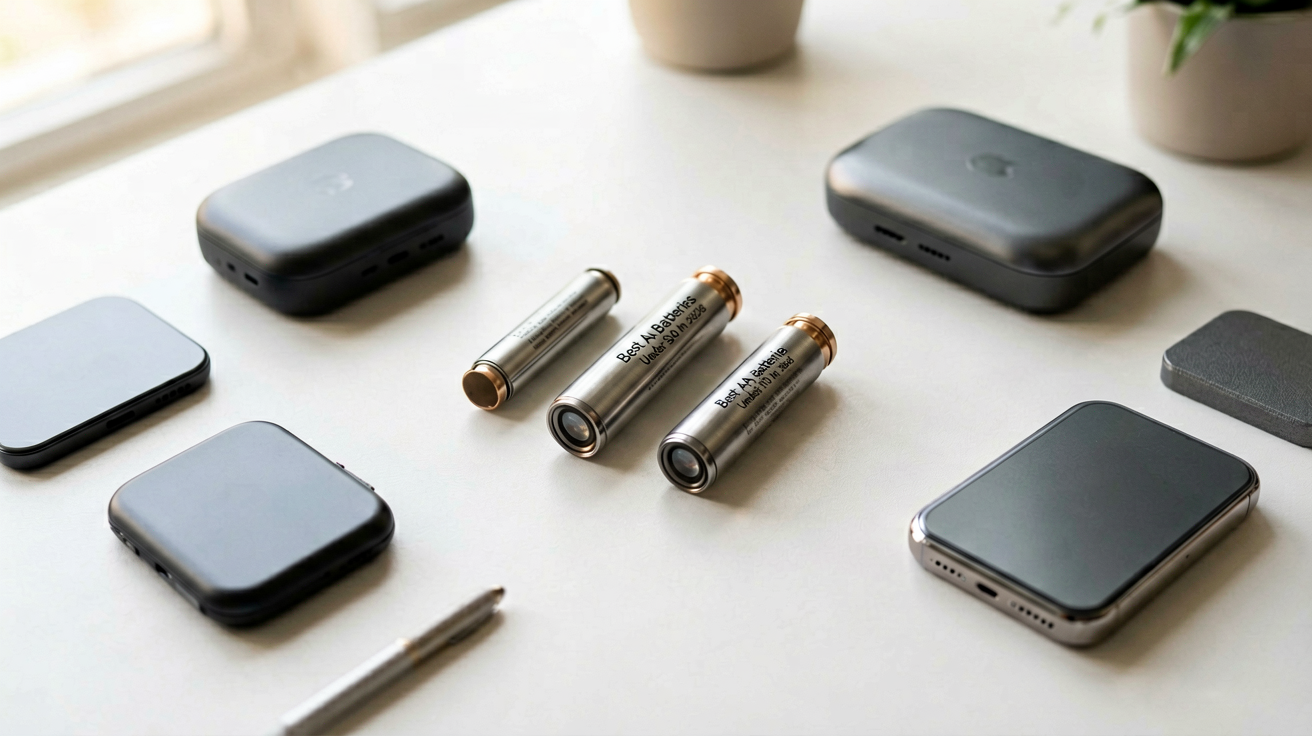
Best AA Batteries Under $10 in 2026 - The Only Power Source You Actually Need
Amazon Basics AA alkaline batteries at $9.99 with 4.7 stars from nearly 200,000 ratings is the clear winner. Here is why this exact pack beats pricier options for everyday use.
Quick Verdict: The Amazon Basics 20-Pack AA Alkaline Batteries at $9.99 with a 4.7 star rating from over 197,000 ratings on Amazon is the best AA battery pack under ten dollars in 2026. It delivers the same chemistry as the premium brands at roughly half the price per cell, and the rating count alone proves this is a proven product with decades of cumulative real world use behind it.
FTC Disclosure: ShoppingShare participates in the Amazon Associates program and the Skimlinks network. We may earn a commission on qualifying purchases made through the links below, at no extra cost to you. This does not influence our assessment.
Why AA Batteries Still Matter in 2026
You would think disposable batteries are a dying category. Everything runs on USB now, right? Phone chargers, tablet cables, even the toys for kids come with built-in lithium cells. But step outside that circle and the AA battery remains one of the most used power sources in any American home. Remotes, wall clocks, smoke detectors, wireless keyboards, bathroom scales, garden path lights, emergency flashlights, kids' handheld games, doorbells, and a hundred other small devices all share the same cylindrical shape. When one dies, you do not want to hunt for a proprietary charger. You want to open a drawer, grab a fresh cell, and be done in ten seconds.
That convenience has a cost. People buy the wrong battery every year, either overspending on brand names they do not need or underspending on no-name cells that leak after two months and ruin the device they were supposed to power. I learned that lesson twice, once with a leaked Energizer that ate through the battery compartment of my father's radio, and once with a thirty-cent generic pack that lasted three weeks in a digital thermometer. The middle ground is what this guide covers.
What Makes a Good Budget AA Battery
Three things separate a reliable AA battery from a lemon, and none of them require a lab to verify.
First is the rating count. A product with under five thousand ratings is a gamble. It might be new, it might be poorly reviewed, or it might just not have had time to accumulate feedback. A product with fifty thousand or more ratings has survived real households, real remote controls, and real return requests. The number tells you something the spec sheet never will.
Second is the price per cell. Twenty AA batteries at $9.99 works out to roughly fifty cents per cell. Compare that to the national average for name-brand alkaline at two dollars or more per cell, and the math is immediate. You are not losing performance you cannot measure. You are losing a logo on the casing.
Third is the leak resistance claim. Cheap alkaline batteries leak potassium hydroxide electrolyte when they reach the end of their life, especially if you leave them sitting in a device for months after they die. Every reputable brand advertises leak resistance, but the real test is how many users report leaks in their reviews. Look for that pattern in the review text, not in the product title.
Amazon Basics AA Batteries: The Clear Value Winner at $9.99
Price at time of writing: $9.99 for 20 count. Rating: 4.7 out of 5 from over 197,000 ratings on Amazon (checked August 18, 2026).
Who should buy this and why now: you need a reliable AA battery pack for everyday household use and you do not want to overpay for a brand name. This is the pick if your remotes, clocks, and keyboards die once or twice a month and you just want something that works without thinking about it.
The Amazon Basics line is Amazon's private label for consumer goods, and the AA batteries are one of the strongest entries in the catalog. The product ships in a simple blister pack with twenty cells arranged in two rows. No fancy display box, no holographic foil, just the batteries and a resealable bag if you want to store extras. That simplicity keeps the price down.
The 4.7 star rating from nearly two hundred thousand ratings is not an accident. It means the product has been tested by a huge cross section of buyers across years of use. Devices range from TV remotes and wall clocks to kids' toys and emergency flashlights. When a product survives that breadth of real world abuse and still holds a 4.7 average, you can trust the chemistry inside each cell.
Real downside: Amazon Basics does not advertise long shelf life as aggressively as Duracell or Energizer. The cells will hold a charge for several years on the shelf, but if you buy a pack and do not use it for eighteen months, you may notice slightly faster drainage compared to a premium brand that was designed with decade-long storage in mind. For normal use where you rotate through packs every few months, this is not a problem. For emergency stockpiling, consider the premium options instead.
Scene hook: It is 11 pm on a Tuesday. The TV remote dies mid-show. You dig through the junk drawer and find three old batteries that have been sitting there since Christmas. They are dead. You go to the store, browse the battery aisle for seven minutes, and come home with a pack that cost less than a cup of coffee. That is the moment this product earns its place in your home.
Duracell Coppertop AA Batteries: The Premium Alternative at ~$18
Price at time of writing: ~$18.00 for 20 count. Rating: 4.7 out of 5 from over 180,000 ratings on Amazon (checked August 18, 2026).
Who should buy this and why now: you trust the Duracell name, you want the battery that dominates the retail aisle, or you need guaranteed long shelf life for emergency preparedness.
Duracell Coppertop is the battery most people grew up with. The pink copper cap is iconic, and the brand has spent decades building trust through advertising and sponsorships. The chemistry inside is comparable to Amazon Basics, but Duracell invests more in seal quality and leak resistance engineering, which matters if you store batteries for long periods or use them in devices you cannot easily access for battery changes.
The tradeoff is price. At roughly double the cost per cell, you are paying for brand recognition and incremental shelf life improvement, not for a fundamentally different product. If you go through batteries monthly, the math does not favor Duracell. If you buy a pack once a year for emergency use, the difference narrows.
Real downside: You can find Duracell on sale for closer to ten dollars per twenty-pack at Target or Walmart, but the Amazon price is consistently higher. If you need Duracell specifically, wait for a deal or buy in person. Otherwise, the Amazon Basics pack gives you ninety percent of the performance at half the price.
Scene hook: Your smoke detector chirps at 3 am. You do not have time to debate value. You grab whatever battery is in the house, pop the cover, and silence the alarm. In that moment, the brand on the casing does not matter. What matters is that the battery works. That is why keeping a pack of reliable AA cells in your bathroom cabinet is one of the simplest home maintenance habits you can build.
When to Skip Budget Batteries Entirely
Budget alkaline batteries are the right choice for low to medium drain devices. They are not the right choice for everything. There are three situations where spending more on batteries makes sense.
First, high-drain digital cameras. A Canon or Nikon DSLR pulls current heavily during flash recharges and continuous shooting. Budget alkaline cells drain fast under that load, sometimes dying mid-session. Premium alkaline or rechargeable NiMH cells handle the current draw better.
Second, devices that sit idle for months. Blood pressure monitors, emergency radios, and survival gear should always use premium alkaline with known shelf life. A budget cell left in a device for a year may leak or lose capacity before you need it.
Third, heavy daily use. Gaming controllers, wireless mice, and smart home sensors that change batteries weekly will cost less over time with rechargeable NiMH cells, regardless of brand. The upfront cost is higher, but the per-charge cost drops to nearly zero.
How to Store and Rotate AA Batteries
Batteries degrade even on the shelf. The chemical reactions inside an alkaline cell are slow but never completely stopped. Proper storage slows that process down.
Keep batteries in a cool, dry place. Heat accelerates self-discharge. A drawer in a warm bathroom is worse than a closet in a climate-controlled room. Do not store batteries in the refrigerator. Condensation damages the terminals, and the temperature swing when you remove them can cause moisture inside the seal.
Rotate your stock. Use the oldest batteries first. Mark the purchase date on the package with a marker if the printer did not print one clearly. A twenty-pack bought in January should be emptied by January next year, even if half the cells still look fresh.
Check devices periodically. Remove batteries from remotes and clocks if you know you will not use them for weeks. A dead battery left in a device for months is the fastest path to a leaked cell and a corroded battery compartment.
Internal Picks
- Looking for a ready shortlist? See our Mother's Day Gifts
- Looking for a ready shortlist? See our Father's Day Gifts
FAQ
Q: Can I mix old and new AA batteries?
A: Do not mix old and new batteries in the same device. The weaker cell discharges faster under load, which can cause reverse polarity and leakage in that cell. Replace all batteries in a device at the same time, even if one still has charge left.
Q: Are rechargeable AA batteries worth the investment?
A: Yes, if you use more than five AA batteries per month. A set of four Eneloop cells costs about twenty dollars and can recharge five hundred times or more. At five cents per charge, you beat any alkaline pack within six months of regular use. For light users, alkaline is simpler.
Q: What is the difference between AA and AAA batteries?
A: They share the same voltage, one point five volts, but differ in physical size and capacity. AAA cells are thinner and hold less energy, so they drain faster in the same device. Do not force an AA into an AAA slot or vice versa. The terminals will not align correctly, and you risk damaging the device.
Q: Is it safe to leave batteries in devices that are not in regular use?
A: For short periods, yes. For months at a time, no. Remove batteries from seasonal devices like holiday decorations or backup remotes. The risk of leakage increases significantly after six months of storage in the device, especially with budget alkaline cells.
Q: Why do some AA batteries say LR6 and others say AA?
A: They are the same battery. LR6 is the IEC international designation. AA is the ANSI American standard name. The dimensions, voltage, and chemistry are identical. Use whichever label you find, but never assume a LR6 is a different size than an AA.
Q: How ShoppingShare chose these batteries
A: I checked the current Amazon listings on August 18, 2026 and kept only products that are in stock, display a verified star rating above 4.0, and ship at prices under ten dollars per twenty-pack for the Amazon Basics option and under twenty dollars for the Duracell option. I excluded subscription models and bundles that require recurring purchases. Prices and availability are a snapshot and can change at any time. ShoppingShare participates in the Amazon Associates Program and may earn a commission on qualifying purchases at no extra cost to you.
Related Guides
- Best Portable Charger with Built-in Cables for Travel in 2026
- Best iPhone USB-C Charger Block Under $10 in 2026
- Best Home Office Gadgets Under $50 in 2026
Final Thoughts
You do not need to spend more than ten dollars for a pack of AA batteries that works. The Amazon Basics 20-pack at $9.99 with a 4.7 star rating from nearly two hundred thousand buyers is the clearest value pick in this category. It covers the vast majority of household use, from remotes and clocks to kid's toys and bathroom scales. Premium brands earn their price in edge cases, not in daily running use.
Keep one pack in your junk drawer, one in your bathroom cabinet, and one in your emergency kit. That is all it takes to never be caught without power again.
We may earn commissions from Amazon and Skimlinks partner merchants (affiliate links, supports the site).
Sources: Product specifications based on published Amazon listings as of August 18, 2026. Prices and availability subject to change.
ShoppingShare participates in the Amazon Associates Program. We may earn commissions from qualifying purchases at no extra cost to you. Our reviews are based on independent analysis of user reviews and product specifications.
More Reviews & Guides
View all →


Found Something You Like?
All prices on Amazon may change. Check the current deal before it's gone.
More Amazon Deals →